 The Berimbau
A practical guide to playing the berimbau
From your first sound
to leading the roda.
The instrument at the heart of capoeira, taught step by step, with companion videos you can slow right down until it's in your hands.
Fundamentals first
Stringing, holding, balance, and five clean sounds: the things nobody teaches, and the reason most players plateau.
Read it, watch it, drill it, play it
Every lesson has a companion video. Tap the link in the ebook, slow it down, loop it.
Built for the roda
The core toques, the bateria, singing while you play, and an eight-step path into a live roda, written by a Mestre who still remembers being nervous.
What's inside
- Part One: Foundations. Why this guide is different · Know your berimbau · Setup, stringing and tuning · Holding, balance and the body · The sounds of the berimbau
- Part Two: Playing. A simple language for rhythm · Coordination and the drill system · The core toques · The berimbau and the voice
- Part Three: The Roda. The bateria · The berimbau as voice: leading the game · Playing under pressure
- Part Four: Mastery. Variation and improvisation · Care, maintenance and travel · The path forward
Plus a glossary, the notation card, a toque quick reference and a full index of the companion videos.
See how it's taught
Track 5.1: the sounds of the berimbau
Track 3.1: stringing, both methods
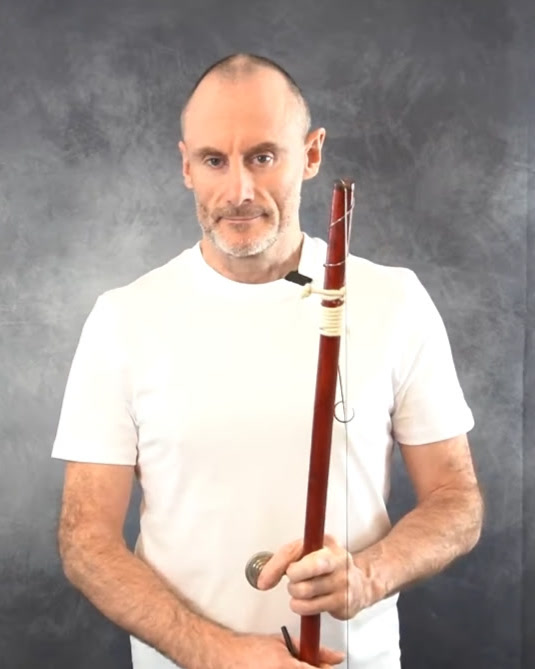
Mestre Soldado
Mestre Soldado wrote The Berimbau for capoeira students and teachers: a step-by-step method that takes you from your first sound to leading the roda. It is a community book, written for every group and both lineages.
Pre-order
Pre-order now and your book and companion videos unlock on . The full ebook is delivered on .
Ebook + companion videos
Ebook and videos from
- The complete ebook (EPUB + PDF) on
- All companion videos, also from
- Your personal access key, valid on up to 3 devices
- Updates to the ebook, free
Secure checkout by Polar. Prices include German VAT.
Book prices are fixed under the German Buchpreisbindung.
Questions
When do I get the book?
The full ebook and all companion videos on .
How do the videos work?
After purchase you receive a personal key. Enter it once at capoeira.cloud/hub and every link or code in the book plays straight away, on up to three devices.
Is this for Angola or Regional?
Both. It's a community book: the toques come from both lineages and the bateria is taught as Contemporânea groups actually play it.
I'm a teacher. Is it for me?
Yes, and perhaps more than for anyone. Most of us learned the berimbau by imitation: we can play, but we were never shown how to teach it. This book is the method behind the playing: the order the skills must come in, the drills that build each one, the mistakes to expect at every step, and a simple notation your students can read in five minutes. Set it as the companion text for your beginners and the whole group speaks one language: the same words for the sounds, the same way of counting, the same “You can now” checkpoints at the end of every chapter. The companion videos do the slow-motion demonstration work so your class time goes to correcting hands, not repeating explanations. It does not replace you; it gives you a structure to teach from and a reference your students can return to between classes.
I'm a complete beginner. Is it for me?
Yes. It starts with holding the instrument. If you've never made a clean sound, this is where to begin.